China Top Reagent Chemicals Manufacturers for Global Buyers

Choosing reliable reagent chemicals manufacturers in China requires more than comparing prices and product lists. Global buyers need consistent purity, clear documentation, and dependable communication. A suitable supplier should explain its production controls, testing methods, and storage conditions without vague promises. This is where practical evaluation matters.

Experienced manufacturers often provide certificates of analysis, safety data sheets, batch numbers, and traceability records. Their laboratories may use instruments such as HPLC, GC, ICP, or Karl Fischer titration, depending on the product. Buyers should also examine packaging details, including sealed bottles, moisture protection, labels, and transport requirements. Small details can prevent large problems.

Quality should be supported by recognized management systems, trained technicians, and documented inspections. ISO certification can offer useful evidence, but it should not replace independent judgment. A certificate alone is not enough. Buyers should request recent batch records, sample testing, and clear explanations of specifications. Responsible suppliers also respect applicable export controls, chemical safety rules, labeling standards, and environmental requirements in destination markets.

No supplier is perfect. Production delays, communication gaps, or specification misunderstandings can still occur. The better manufacturers acknowledge these risks and provide corrective actions. That honesty matters. This guide examines China’s leading reagent chemicals manufacturers through product quality, technical capability, customization options, compliance practices, and international service experience. It aims to help laboratories, universities, healthcare companies, and industrial users make informed sourcing decisions. Careful comparison remains essential, especially when a low quotation seems unusually attractive. Reliability is built batch by batch.
China Top Reagent Chemicals Manufacturers for Global Buyers

China’s Reagent Chemical Industry: 2024 Market Scale and Export Landscape

China’s reagent chemical industry remained a major global supply base in 2024. Market estimates commonly place its value at tens of billions of yuan, although figures vary by product definition. Laboratory reagents, analytical standards, industrial testing chemicals, and research-grade materials all contribute to this scale. Demand increased through pharmaceuticals, food testing, environmental monitoring, universities, and advanced manufacturing.

Export activity continued across Asia, Europe, North America, the Middle East, and Latin America. Asian markets remained especially important because of shorter delivery routes and strong manufacturing links. Exporters shipped products in carefully labeled bottles, sealed cartons, and temperature-controlled packages when required. Documentation usually covered purity, batch numbers, safety data, and test certificates. Buyers now examine traceability as closely as price.

Quality is not perfectly uniform. That matters. Some suppliers provide excellent technical files, while others still need stronger consistency between batches. Global buyers should review accreditation, production controls, packaging practices, and after-sales communication. They should also confirm import rules before ordering, since labeling and chemical documentation differ by destination. China’s export position is strong, but long-term growth will depend on reliability, clearer data, and better support for specialized applications.

China’s Reagent Chemical Industry: 2024 Market Scale and Export Landscape

China’s 2024 chemical export structure by selected HS chapters, with reagent-related products mainly represented by inorganic chemicals, organic chemicals, and other specialty chemical products.

Values are rounded export indicators in USD billions. HS 28, HS 29, HS 30, and HS 38 are used as internationally comparable product-group proxies for China’s reagent and chemical manufacturing ecosystem. Source: UN Comtrade database, China exports, 2024; HS chapter values rounded for presentation.

Leading Chinese Manufacturers by AR, GR, and ≥99.9% Purity Grades

China’s reagent chemical manufacturers serve global buyers through AR, GR, and ≥99.9% purity grades. AR reagents support routine analytical testing, including titration, sampling, and quality control. GR grades are better suited to demanding laboratory procedures. However, grade names alone do not prove performance. Buyers should review the certificate of analysis, specification sheet, and batch traceability before ordering.

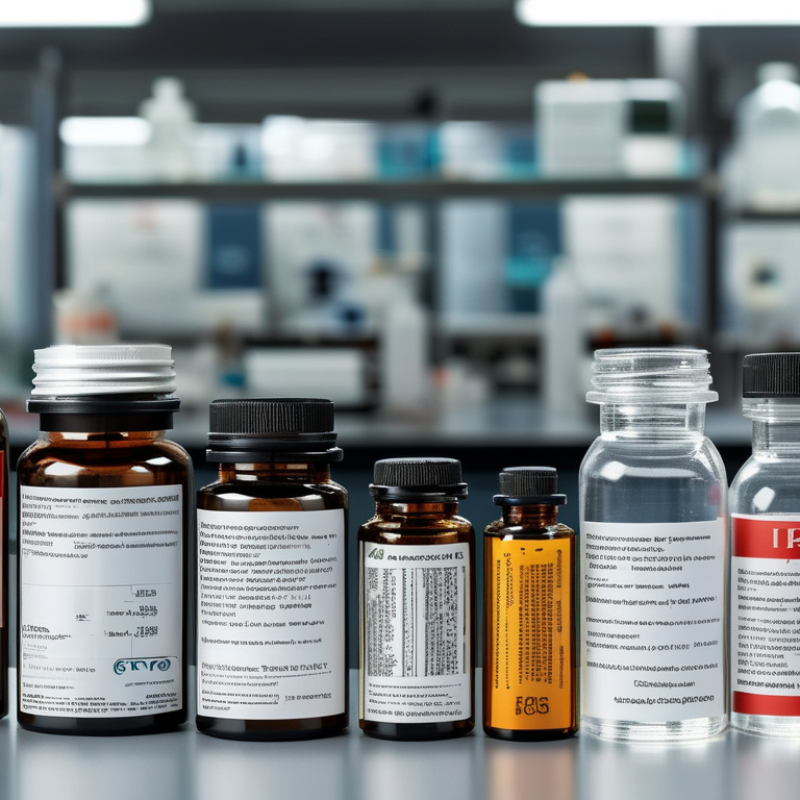
For ≥99.9% purity materials, small impurities can affect sensitive testing. Ask for the testing method, assay result, moisture level, and trace-metal data. A dependable supplier should provide clear lot numbers and consistent packaging. Amber bottles, sealed inner liners, and readable labels protect light-sensitive or moisture-sensitive chemicals during transport. Factory experience matters, but documentation matters more. A polished catalog is not evidence. I would also compare several recent batches, because one strong report may hide uneven production.

Tips: Request a sample batch first. Check the certificate against the label. Confirm the shelf life and storage temperature. Discuss export packaging early, especially for humid routes. Do not choose only by price; a cheaper reagent may create repeat testing and wasted laboratory time. One detail is often missed: confirm whether purity is reported on a dry basis or as received. That difference can change your results.

Quality Assurance Through ISO 9001, ISO/IEC 17025, and GB Standards

China Top Reagent Chemicals Manufacturers for Global Buyers

Quality assurance begins with a documented system, not a polished certificate. The ISO Survey 2022 recorded 1,265,216 ISO 9001 certificates worldwide. This figure shows how widely quality management is adopted. It does not prove every batch is consistent. Buyers should review audit scope, corrective-action records, and change-control procedures before ordering.

ISO/IEC 17025 adds technical confidence to testing laboratories. It evaluates competence, equipment calibration, method validation, and measurement traceability. For reagent chemicals, this can mean checking purity, moisture, residue, and contaminant results against approved methods. A useful certificate of analysis should identify the lot number, test method, specification, and analyst review. Small details matter.

GB standards provide China-specific requirements for product quality, labeling, storage, and testing. Reliable manufacturers should map each reagent to the applicable GB standard or explain any recognized alternative. They should also retain sealed reference samples and provide traceable batch records. This is where experience becomes visible. Documents can look complete while sampling remains weak. Buyers should ask for recent, redacted records and independent laboratory evidence. Certification is valuable, but it is not a substitute for careful verification.

Global Compliance: COAs, SDS, REACH, and GHS Labeling Requirements

China Top Reagent Chemicals Manufacturers for Global Buyers

For global buyers, compliance begins before a reagent leaves the factory. A reliable manufacturer should provide a batch-specific Certificate of Analysis (COA). It should show the product name, lot number, purity, test methods, release date, and acceptance limits. I have found that missing method details often create avoidable questions during customs clearance and laboratory audits. Small gaps matter.

The Safety Data Sheet (SDS) must describe hazards, handling, storage, transport, and emergency measures. It should match the actual formulation and follow the required 16-section structure. GHS labeling needs clear hazard pictograms, signal words, precautionary statements, and supplier information. Local rules can differ, even when the chemical is unchanged. Labels need checking.

REACH requirements deserve careful review for shipments entering the European market. Registration, exemptions, tonnage, intended use, and downstream responsibilities may affect the correct compliance path. A professional supplier should provide supporting statements, substance identifiers, and current regulatory information without making vague promises. Document control is essential. Version dates should align across the COA, SDS, label, and technical file. In practice, communication can still fail when translated documents use inconsistent chemical names. Buyers should compare every identifier before approval, request updates after formulation changes, and retain records for audits. No system is perfect, and overlooked revisions remain a real risk.

China Top Reagent Chemicals Manufacturers for Global Buyers - Global Compliance: COAs, SDS, REACH, and GHS Labeling Requirements

Compliance Dimension Applicable Reference Key Data or Document Elements Buyer Verification Points Typical Export Relevance
Certificate of Analysis (COA) Customer specification, pharmacopeia, ISO or validated internal test method Product name, grade, batch number, manufacturing date, test items, specification limits, actual results, test methods, release date, authorized approval Confirm that the COA matches the shipped batch, grade, packaging, specification and analytical method; check whether results are numerical rather than only “pass” Commonly requested for laboratory, industrial, food, pharmaceutical and regulated applications
Safety Data Sheet (SDS) UN GHS; EU REACH Regulation (EC) No 1907/2006, Annex II, where applicable The 16 standard SDS sections, hazard classification, first aid, firefighting, accidental release, handling, storage, exposure controls, physical properties, stability, toxicology, ecology, disposal, transport, regulatory and revision information Check product identifier, revision date, language, concentration range, hazard classification, transport details and emergency contact information Normally required by distributors, freight forwarders, workplaces and customs or regulatory reviewers
EU REACH Status Regulation (EC) No 1907/2006 Substance identity, CAS number, EC number, tonnage band where relevant, registration or exemption basis, Only Representative information when applicable Determine whether the importer or an appointed Only Representative holds the relevant responsibility; verify that the supplied use is covered and that restrictions or authorisation requirements are addressed Relevant when a substance or mixture is placed on the European Economic Area market
EU CLP Classification and Label Regulation (EC) No 1272/2008 on classification, labelling and packaging Product identifier, hazard pictograms, signal word, hazard statements, precautionary statements, supplier details and nominal quantity where required Compare the label with the current SDS and classification; confirm language requirements, packaging integrity and child-resistant or tactile-warning provisions where applicable Required for hazardous substances and mixtures supplied to the EU market, subject to applicable exemptions
GHS Hazard Communication UN Globally Harmonized System of Classification and Labelling of Chemicals; destination-country implementation Hazard classes and categories, pictograms, signal word, hazard statements, precautionary statements and supplier identification Confirm the destination jurisdiction, applicable GHS revision, required language, label dimensions and local emergency-contact rules Applies differently by country because GHS is implemented through national or regional legislation
China SDS and Label Format Relevant Chinese national standards include GB/T 16483 and GB/T 17519; applicable GB 30000-series classification standards Chinese product identifier, hazard information, pictograms, signal word, hazard and precautionary statements, supplier details and emergency information Request the Chinese-language version for domestic handling and a destination-market version for export; ensure both are consistent with the formulation Useful for production-site compliance in China and for evaluating the supplier’s hazard-communication controls
Product Identity and Traceability Quality-management and chemical traceability practices Chemical name, CAS number, molecular formula, molecular weight, grade, batch or lot number, net weight, country of origin and shelf-life information Ensure the identity is consistent across quotation, purchase order, label, COA, SDS, invoice and packing list Important for customs clearance, incoming inspection, recalls and regulated laboratory use
Purity and Analytical Performance Product specification, recognized analytical methods or customer-validated methods Assay, water content, residue on ignition, acidity or alkalinity, trace metals, impurities, absorbance, particle size or other product-specific attributes Verify method suitability, detection limits, acceptance criteria, measurement units and whether the grade is analytical, reagent, ACS, laboratory or another defined grade Determines suitability for research, testing, manufacturing and quality-control applications
Packaging and Transport Classification UN Model Regulations and applicable air, sea, road or rail transport rules UN number, proper shipping name, transport hazard class, packing group where assigned, marine-pollutant status and packaging instructions Confirm classification with the actual concentration and packaging; check outer marks, labels, closure, leakage protection and temperature controls Critical for dangerous-goods shipments and freight booking
Restricted Substances and Market Access REACH restrictions and authorisation, SVHC communication duties, destination-country chemical regulations and customer restricted-substance lists Restricted substance screening, SVHC declaration where applicable, concentration thresholds and intended-use information Ask for a dated compliance declaration and confirm that it covers the exact product, formulation, concentration and market Particularly important for mixtures, specialty reagents and products used in regulated manufacturing
Quality Management Evidence ISO 9001 or other quality systems; ISO/IEC 17025 for competent testing laboratories where applicable Quality certificate scope, laboratory competence, calibration controls, change-control process, deviation handling and complaint or recall procedure Check certificate validity, issuing body, scope and whether the certificate covers the relevant site or testing activity Supports supplier qualification but does not replace product-specific testing or regulatory verification
Document Control and Change Notification Customer quality agreement and applicable chemical-safety obligations Document revision number, effective date, formulation or process change notice, updated COA specifications and updated SDS or labels Require advance notification for changes affecting identity, purity, hazard classification, packaging, origin or regulatory status Reduces the risk of unexpected nonconformity during repeat purchasing or product registration

Note: Regulatory obligations depend on the chemical identity, concentration, intended use, shipment mode and destination market. Buyers should confirm the latest requirements with the relevant competent authority or qualified regulatory professional.

Supplier Comparison Using MOQ, Lead Time, and ≥99.0% Assay Data

Global buyers often compare Chinese reagent manufacturers through three measurable filters: MOQ, lead time, and assay. These figures reveal more than a polished product page. For routine laboratory grades, an MOQ of 1–5 kilograms may suit pilot work, while larger batches can reduce unit cost. Ask whether the quoted MOQ applies to one grade, one package size, or a full production lot. Small details matter. Lead time should be split into stock dispatch and custom production. A credible quote states both, preferably with a shipping window and batch-release date. If delivery takes seven days from stock, confirm that the material has passed final quality review. Production orders may need 20–45 days, depending on packaging and testing.

For assay, set a clear threshold of ≥99.0%, then inspect the test method. An assay number without a lot-specific certificate is weak evidence. Check the batch number, analytical technique, test date, moisture, and impurity limits. Independent retesting can protect high-value purchases, especially when specifications sit close to the threshold. Yet purity alone is incomplete. Particle size, solubility, container integrity, and storage conditions can affect laboratory performance. Some suppliers respond quickly but provide vague certificates. Others offer strong documentation but miss the requested delivery window. That trade-off deserves a weighted scorecard, not a quick impression.

A practical comparison sheet can assign 40% to assay documentation, 30% to lead time, and 30% to MOQ. Record quoted values beside verified values. Then request a retained sample or pre-shipment document review. One caution remains: an advertised ≥99.0% assay may reflect one test, not long-term consistency. Review several lots when possible. Suppliers that explain deviations openly are often more dependable than those claiming perfect performance. Procurement decisions improve when evidence is dated, traceable, and tied to the exact product grade.

Contact Us

We offer a just-in-time delivery solution supplying the highest quality materials to our customers. Get in touch today and learn how we can help your company.

Get in touch