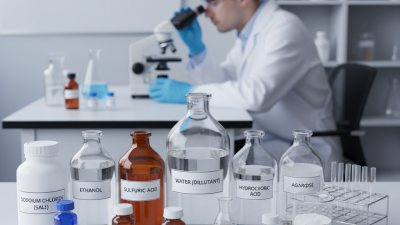
Top 10 Types of Reagent Chemicals for Global Buyers?
Choosing the right reagent chemicals is not a simple shopping exercise. Global buyers compare purity, intended use, packaging, documentation, and delivery conditions. A clear product label is helpful. It is not enough.
This guide introduces ten important types, including analytical reagents, laboratory solvents, acids, bases, buffer solutions, indicators, titration reagents, chromatography chemicals, reference standards, and molecular biology reagents. Each category serves a different purpose. A titration reagent may require exact concentration control. A chromatography solvent may demand low water content and minimal residue. Reference standards need reliable certificates, traceability, and controlled storage. Small differences can affect test results.
Dr. John C. Warner, a leading green chemistry expert and co-founder of the Warner Babcock Institute, said, “The best way to deal with waste is not to create it.” His principle matters when buyers assess reagent chemicals. Better selection can reduce expired stock, unnecessary transport, and repeated testing. It can also support safer laboratory practices.
Quality must remain central. Buyers should review certificates of analysis, safety data sheets, batch numbers, shelf life, and supplier quality systems. Regional requirements may also influence labeling, transport, and import procedures. A supplier with strong technical support is often more valuable than the lowest quoted price.
No list is perfect. Laboratory needs differ. A product suitable for education may fail in regulated testing. Even experienced buyers can overlook temperature exposure during shipping. Careful verification still matters. This article provides a practical starting point for comparing reagent chemicals across international supply chains.
What Reagent Chemicals Are and Why They Matter to Global Buyers
Reagent chemicals are high-purity substances used to identify, measure, separate, or create other materials. Laboratories depend on them for repeatable test results. Purity changes outcomes. A small impurity can shift a pH reading, weaken a calibration curve, or create unexpected color changes. Global buyers therefore assess more than price. They examine concentration, grade, packaging, shelf life, and batch documentation.
Common reagent categories include acids, bases, solvents, salts, buffers, indicators, oxidizing agents, reducing agents, analytical standards, and biological reagents. Each type supports a different task. Buffers help maintain stable pH during testing. Analytical standards support accurate instrument calibration. Solvents influence extraction quality and reaction consistency. Biological reagents may require controlled temperatures during transport. Labels matter.
International purchasing adds practical concerns. Buyers should verify certificates of analysis, safety data sheets, lot numbers, and storage instructions before ordering. Packaging must protect contents from heat, moisture, light, or leakage. Import rules also vary by destination, so documentation should match the receiving country’s requirements. An experienced buyer checks technical details with laboratory staff, not only with purchasing teams. This reduces unsuitable substitutions. A cheaper grade may fail the method. In practice, mistakes happen. A shipment can arrive with correct paperwork but poor temperature control. Buyers should record delivery conditions and inspect seals immediately. That habit improves traceability, although it cannot replace independent quality testing.
How Reagent Chemicals Are Classified by Function and Purity
Reagent chemicals are best classified by both function and purity, not by packaging alone. Functional groups include acids and bases for pH control, solvents for separation, salts for ionic adjustment, indicators for visual detection, buffers for stable reactions, and reference standards for calibration. Other major types include analytical reagents, HPLC-grade solvents, LC-MS-grade solvents, molecular biology reagents, and microbiology media. These categories overlap, so buyers should check the intended method before comparing prices.
Purity labels carry practical meaning. Laboratory grade suits routine preparation, while analytical or ACS-grade materials support controlled testing. HPLC-grade solvents usually require low residue and ultraviolet absorbance. LC-MS-grade products demand stricter control of trace ions and background noise. Reference standards need assigned values, uncertainty data, and traceability. ISO/IEC 17025 emphasizes competent testing and metrological traceability. It is not merely paperwork.
UNEP’s Global Chemicals Outlook II projects global chemical production to double between 2017 and 2030, increasing pressure on quality systems and supply chains. A certificate of analysis should show assay, impurities, water content, lot number, and test methods. Small details matter. However, purity is not absolute. A 99.9% assay may still be unsuitable for trace analysis because the remaining impurities affect the result. In my experience, buyers often compare purity percentages too quickly. Function, detection limit, storage temperature, and container cleanliness deserve equal attention.
Top 10 Types of Reagent Chemicals for Global Buyers? - How Reagent Chemicals Are Classified by Function and Purity
Functional categories, representative compounds, purity designations, and common laboratory applications
| No. | Reagent Type | Representative Chemicals | Primary Function | Typical Purity or Quality Designation | Common Applications | Key Buying Consideration |
|---|---|---|---|---|---|---|
| 1 | Acids | Hydrochloric acid (HCl), sulfuric acid (H2SO4), nitric acid (HNO3), acetic acid (CH3COOH) | Proton donation, pH adjustment, digestion, hydrolysis, and acid-base titration | Analytical reagent (AR), ACS reagent, trace-metal grade, semiconductor or electronic grade; concentration commonly specified by assay | Sample preparation, titration, inorganic analysis, metal dissolution, and chemical synthesis | Assay, trace metals, concentration, container compatibility, and dangerous-goods shipping |
| 2 | Bases and Alkalis | Sodium hydroxide (NaOH), potassium hydroxide (KOH), ammonia solution (NH3), sodium carbonate (Na2CO3) | Proton acceptance, neutralization, saponification, and alkaline pH control | AR, ACS reagent, titration standard, low-carbonate, or low-metal grade; solid reagents are often specified by assay and carbonate content | Neutralization, titration, cleaning validation, extraction, and synthesis | Carbonate contamination, concentration stability, hygroscopicity, and corrosivity |
| 3 | Inorganic Salts | Sodium chloride (NaCl), potassium chloride (KCl), ammonium sulfate ((NH4)2SO4), magnesium sulfate (MgSO4) | Source of ions, ionic-strength adjustment, precipitation, and reaction media | General reagent, AR, ACS reagent, pharmaceutical grade, or molecular-biology grade depending on intended use | Buffer preparation, protein precipitation, cell culture media, gravimetric analysis, and calibration solutions | Assay, insoluble matter, trace impurities, moisture, and biological suitability |
| 4 | Laboratory Solvents | Methanol, ethanol, acetone, acetonitrile, hexane, ethyl acetate, and dichloromethane | Dissolution, extraction, reaction medium, washing, and chromatographic separation | Reagent grade, HPLC grade, GC grade, LC-MS grade, spectrophotometric grade, or anhydrous grade | HPLC, gas chromatography, LC-MS, organic synthesis, sample extraction, and spectroscopy | Water content, UV absorbance, residue after evaporation, chromatographic background, and flammability |
| 5 | Buffer Components | Phosphate salts, acetate salts, Tris, HEPES, citrate, and bicarbonate | Resistance to pH change during chemical, biochemical, or biological procedures | AR, ACS reagent, molecular-biology grade, cell-culture grade, or biotechnology grade; pH and impurity profiles are important | Biochemistry, electrophoresis, chromatography, cell culture, enzyme assays, and pharmaceutical testing | Buffer capacity, pH range, biological compatibility, endotoxin level, and metal contamination |
| 6 | Indicators and Dyes | Phenolphthalein, methyl orange, bromothymol blue, methyl red, and crystal violet | Visual or spectroscopic indication of pH, reaction endpoint, adsorption, or cellular staining | Indicator grade, analytical reagent, ACS reagent, or certified reference material when quantitative performance is required | Acid-base titration, microscopy, colorimetric testing, chromatography visualization, and microbiology | Transition range, color strength, solvent compatibility, and contamination from co-products |
| 7 | Oxidizing and Reducing Agents | Hydrogen peroxide (H2O2), potassium permanganate (KMnO4), sodium thiosulfate (Na2S2O3), sodium borohydride (NaBH4) | Electron transfer, oxidation-reduction titration, synthesis, bleaching, and deoxygenation | AR, ACS reagent, analytical standard, or stabilized solution grade; active content and decomposition products are critical | Redox titration, environmental analysis, organic synthesis, disinfection studies, and metallurgical testing | Oxidizing strength, stabilizer content, light sensitivity, storage temperature, and transport classification |
| 8 | Complexing and Chelating Agents | EDTA, nitrilotriacetic acid, citric acid, oxalic acid, and 1,10-phenanthroline | Binding metal ions, controlling metal availability, and supporting complexometric analysis | AR, ACS reagent, titration grade, spectrophotometric grade, or molecular-biology grade | Water-hardness testing, metal-ion titration, trace-metal analysis, buffer systems, and enzyme research | Chelation capacity, metal background, hydration state, assay, and solubility at the working pH |
| 9 | Analytical Standards and Reference Materials | Potassium hydrogen phthalate, sodium carbonate, certified metal solutions, hydrocarbon mixtures, and analyte reference compounds | Instrument calibration, method validation, quantitative measurement, and quality control | Primary standard, analytical standard, certified reference material (CRM), or certified solution with traceable uncertainty | Calibration curves, titration standardization, proficiency testing, environmental analysis, and pharmaceutical analysis | Certificate of analysis, metrological traceability, assigned value, uncertainty, expiry date, and lot consistency |
| 10 | Molecular Biology and Biochemical Reagents | Deoxynucleoside triphosphates, agarose, acrylamide, lysozyme, proteases, DNA/RNA stains, and nuclease-free water | Supporting nucleic-acid manipulation, electrophoresis, enzymatic reactions, and protein analysis | Molecular-biology grade, biotechnology grade, nuclease-free, cell-culture grade, or activity-defined enzyme grade | PCR, DNA/RNA purification, electrophoresis, cloning, sequencing workflows, and protein assays | Nuclease and endotoxin testing, enzyme activity, sterility, lot-to-lot consistency, cold-chain requirements, and shelf life |
Note: Purity designations are commonly defined by pharmacopeial, analytical, chromatographic, molecular-biology, or internal quality specifications. Buyers should verify the applicable certificate of analysis, test method, impurity limits, concentration, storage conditions, and regulatory requirements for each intended use.
The Top 10 Reagent Chemical Types Used Across Global Industries
Top 10 Types of Reagent Chemicals for Global Buyers
Reagent chemicals support testing, manufacturing, healthcare, food control, and environmental monitoring.
The ten main types are acids, bases, salts, organic solvents, buffers, indicators, analytical standards, enzymes, stains and dyes, and molecular biology reagents. Each category serves a different laboratory purpose.
Acids and bases adjust pH or drive reactions. Salts control ionic strength.
Solvents help dissolve samples, while buffers protect stable testing conditions.
Small details matter.
According to Fortune Business Insights, the global laboratory chemicals market was valued at about USD 27.7 billion in 2023 and is projected to expand substantially by 2032.
Its coverage reflects rising demand for solvents, standards, and specialty reagents across research and industrial laboratories.
MarketsandMarkets also reports continued growth in analytical standards, driven by stricter testing requirements and pharmaceutical quality control.
These figures indicate demand, not automatic purchasing safety.
Global buyers should verify purity grades, certificate-of-analysis data, traceability, shelf life, and transport conditions.
Analytical standards may require certified reference values.
Enzymes can lose activity after poor temperature control.
Some indicators degrade under light.
Molecular biology reagents often need cold-chain handling.
I have found that a low purchase price can hide higher testing costs.
Classification is useful, but imperfect. A buffer may also function as a process-control reagent.
Reliable procurement therefore matches the chemical’s intended method, instrument, industry standard, and local regulatory requirements.
How to Compare Quality, Packaging, Safety, and Regulatory Requirements
Top 10 Types of Reagent Chemicals for Global Buyers?
How to Compare Quality, Packaging, Safety, and Regulatory Requirements
Global buyers often source acids, bases, salts, solvents, buffers, indicators, oxidizers, reducing agents, stains, and molecular biology reagents. Each type requires a different purchasing checklist. Analytical reagents need clear purity grades, trace-metal limits, batch numbers, and a current Certificate of Analysis. Biological reagents may also require activity data, sterility information, and defined storage temperatures.
Packaging must match chemical behavior and transport conditions. Solvents may need tightly sealed containers with suitable liners. Corrosive liquids require compatible bottles, leak protection, and secondary containment. Light-sensitive materials need opaque packaging. Small details matter. A damaged cap can ruin an entire shipment. Buyers should check fill volume, tamper evidence, shelf life, and temperature indicators before approval.
Safety Data Sheets should match the exact product and concentration. Labels should show hazards, handling advice, storage conditions, and emergency information. Regulatory checks may include classification, customs documentation, import restrictions, workplace rules, and destination-country registration. Requirements can change. Verify them with qualified local specialists and official authorities.
A low price can look attractive, but inconsistent packaging creates hidden costs. In real procurement reviews, buyers sometimes focus too heavily on purity numbers. That is an incomplete comparison. Test methods, measurement uncertainty, traceability, and complaint handling also reveal supplier reliability. I would request recent documents and sample packaging before placing a large order. Even then, assumptions remain. Recheck them.
How Global Buyers Can Select Reliable Reagent Chemical Suppliers
Top 10 Types of Reagent Chemicals for Global Buyers?
Global laboratories commonly purchase acids, bases, salts, solvents, buffers, indicators, oxidizing agents, reducing agents, complexing agents, and biological reagents. Each type supports different testing, calibration, synthesis, or quality-control needs. However, chemical type alone does not prove supplier reliability. Purity, packaging, stability, and documentation matter equally.
How Global Buyers Can Select Reliable Reagent Chemical Suppliers
A dependable supplier should provide a current Certificate of Analysis, Safety Data Sheet, batch number, expiry date, and clear storage guidance. Check whether test methods match recognized standards and whether manufacturing sites follow suitable quality systems. Lot traceability is essential when results must be audited. Ask about temperature-controlled shipping for sensitive materials, especially buffers and biological reagents. Communication matters too. Delayed answers often become delayed shipments.
A low price may look efficient. It may not be.
Tips: Request a small evaluation order before signing a long-term contract. Compare purity specifications, not only prices. Confirm customs documents, language requirements, labeling rules, and destination-country regulations before shipment. Inspect seals, labels, and temperature records when goods arrive. I have found that even experienced buyers overlook secondary packaging or unclear retest dates. That mistake can affect an entire testing schedule. When specifications remain uncertain, ask for independent test results or a retained-sample review. Reliable suppliers accept reasonable questions and record changes openly.
Top 10 Types of Reagent Chemicals for Global Buyers
Representative analytical-reagent specification benchmarks for supplier evaluation
These examples reflect commonly published concentration or assay specifications for widely purchased laboratory reagents. Buyers should compare the exact grade, impurity profile, packaging, safety documentation, traceability, delivery capability, and batch-specific Certificate of Analysis before selecting a supplier. Specifications can vary by standard and application.
Related Posts
-
Top 10 Laboratory Chemicals Essential for Every Research Facility?
-

Top 10 Laboratory Chemicals for Effective Research Solutions?
-

How to Safely Handle Laboratory Chemicals in Your Home Lab
-

How to Understand Chemistry Chemicals for Everyday Use?
-
Top 5 Construction Chemicals Tips for Better Building Projects?
-
What is Chem Supply and Why is it Important for Industries?
Contact Us
We offer a just-in-time delivery solution supplying the highest quality materials to our customers. Get in touch today and learn how we can help your company.
Get in touch