Top 10 Reagent Chemicals You Need for Your Laboratory Experiments
In the dynamic landscape of scientific research and laboratory experiments, the significance of
high-quality reagent chemicals cannot be overstated. Research
conducted by the American Chemical Society indicates that over 60%
of laboratory failures can be traced back to the use of inferior reagents, highlighting the crucial
role that reagent chemicals play in achieving accurate and reproducible results. As the demand for
advanced analytical techniques continues to grow, so does the necessity for reliable and efficient
reagents, which serve as the backbone of various experimental procedures.
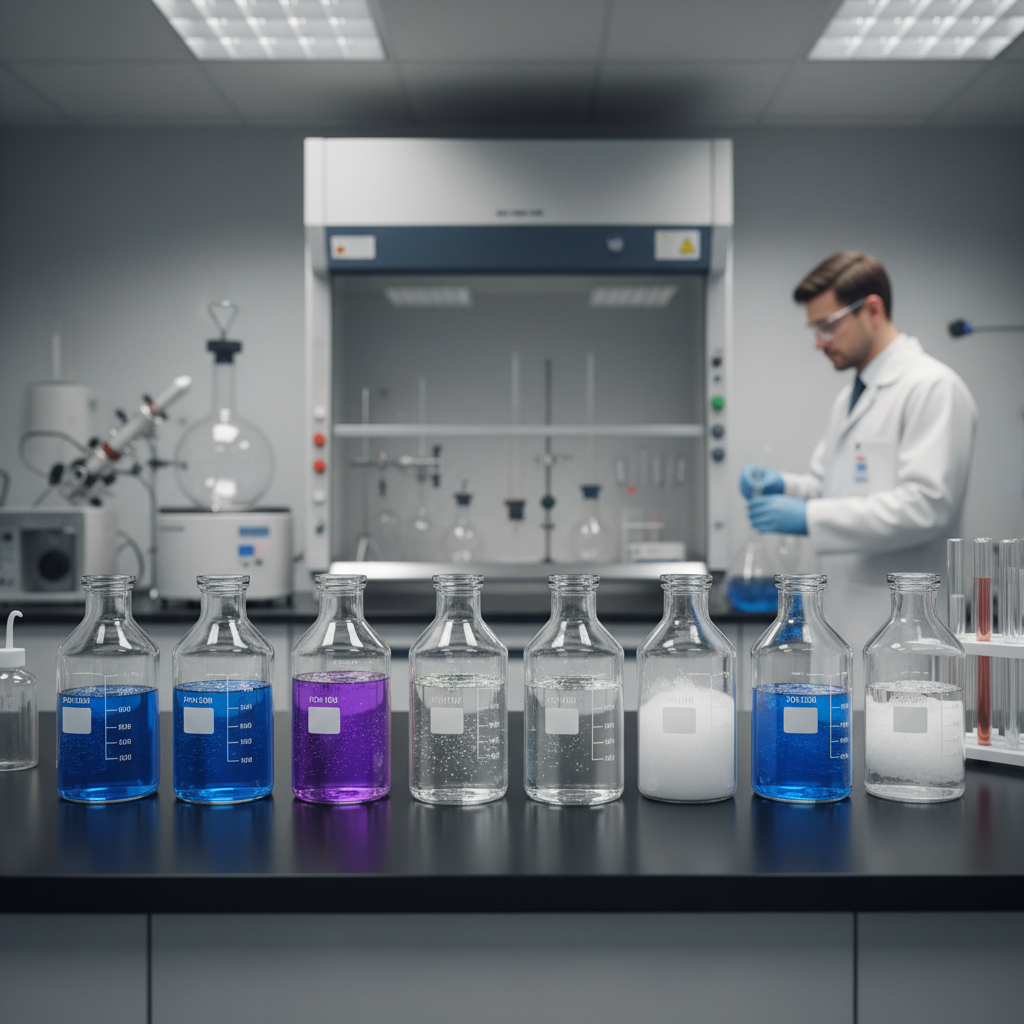
According to a recent market analysis by Mordor Intelligence, the global laboratory chemicals market
is projected to reach USD 76 billion by 2025,
driven largely by innovations in pharmaceutical research and biotechnology. This surge underscores the
importance of selecting the right reagent chemicals to ensure the integrity of experiments and
the validity of outcomes. In this context, understanding the essential reagent chemicals required for
various laboratory applications becomes imperative for researchers aiming to enhance productivity and
foster innovation in their work.
This article aims to guide scientists and laboratory professionals in identifying the top 10 reagent chemicals they need for their experimental endeavors,
laying the foundation for successful and accurate scientific exploration.
Essential Reagents for Accurate Experimental Results in 2025
In the evolving landscape of laboratory research, the accuracy of experimental results hinges critically on the quality of the reagents utilized. According to a recent report published by the American Chemical Society, nearly 60% of experimental variability can be attributed to reagent quality. This underscores the importance of selecting top-tier chemicals for your laboratory. As we advance into 2025, certain reagents stand out as essential for achieving precise and reliable results. High-purity solvents, such as HPLC-grade methanol and acetonitrile, are indispensable for chromatographic analyses, while analytical-grade acids and bases are fundamental for titration and pH adjustments.
Tips: Always verify the certificates of analysis provided by reagent suppliers to ensure compliance with industry standards. Additionally, maintaining proper storage conditions is crucial; many chemicals deteriorate when exposed to moisture or light, potentially compromising the integrity of your experiments. Regularly updating your reagents inventory based on expiration dates can prevent the risk of using degraded chemicals.
Furthermore, as the demand for green chemistry grows, consider integrating more sustainable reagents. Research indicates that using bio-based solvents can reduce environmental impact while still providing high sensitivity and specificity in assays. Opting for such reagents not only aligns with global sustainability goals but also enhances the reproducibility of results across various experiments. Investing in quality is, therefore, not just good practice; it's essential for the scientific community's advancement.
Key Properties to Consider When Selecting Laboratory Reagents
When selecting laboratory reagents, several key properties should be considered to ensure optimal results in your experiments. First and foremost, the purity of the reagents is crucial, as impurities can significantly affect the outcomes. Laboratory-grade chemicals offer varying levels of purity, so it is essential to choose the right grade based on the specific requirements of your experiments. Additionally, stability is an important factor. Reagents that degrade over time or in response to environmental factors can lead to unreliable results, thus selecting stable compounds enhances the reliability of experimental procedures.
Another critical property to evaluate is the reactivity of the reagents. Depending on the nature of your experiments, reagents with specific reactivity profiles may be needed. For example, flotation reagents used in mineral processing, such as collectors, frothers, modifiers, and depressants, each play distinct roles in optimizing separation processes. Understanding the interactions between these chemicals and the substrates involved can greatly influence the efficiency of separation techniques. Finally, safety and environmental considerations have become more prominent; selecting reagents that pose minimal risk to health and the environment facilitates safer laboratory practices.
Innovative Chemicals Transforming Laboratory Practices in 2025
In 2025, laboratory practices are being revolutionized by innovative chemicals that enhance precision, safety, and efficiency. New reagent chemicals are being developed with advanced functionalities that not only improve experiment outcomes but also streamline workflows. For example, bio-compatible reagents are increasingly used in various biological assays, providing researchers with safer options for handling sensitive samples. This trend is crucial for fostering more environmentally friendly and sustainable research practices.
**Tips:** When incorporating new chemicals into your lab, always conduct a thorough risk assessment and consult the Safety Data Sheets (SDS) to ensure compliance with safety protocols. Additionally, consider attending workshops or webinars that focus on the applications of these innovative reagents, which can offer insights into maximizing their effectiveness in your experiments.
As laboratories embrace these innovative approaches, cross-disciplinary collaboration is becoming more prevalent. Chemists, biologists, and data scientists are working together to explore the full potential of these advanced reagents. This synergy not only sparks creativity in experimental design but also enhances the reproducibility and accuracy of scientific findings, leading to more reliable results across various research fields.
Safety Protocols and Handling Tips for Laboratory Reagents
When working with reagent chemicals in a laboratory environment, safety should always be the top priority. Understanding how to properly handle these substances can minimize risks and ensure a safe working atmosphere. Proper labeling and storage of chemicals are crucial steps. Always store reagent chemicals in designated areas and make sure they are clearly labeled to prevent any accidental mix-ups.
Tips for handling reagents effectively include always wearing appropriate personal protective equipment (PPE), such as gloves, goggles, and lab coats. This protects you from potential splashes and spills. When transferring or mixing chemicals, do so in fume hoods whenever possible to avoid inhaling harmful vapors. Additionally, familiarize yourself with the safety data sheets (SDS) for each chemical you work with, as they provide vital information on the hazards and first aid measures associated with the substances.
Another essential tip involves waste disposal. Never dispose of chemical waste down the sink unless it is confirmed to be safe by local regulations. Use designated waste containers for hazardous materials and ensure these are sealed correctly to avoid leaks. Following these protocols helps maintain a safe laboratory environment for all personnel involved in your experiments.
Top 10 Reagent Chemicals You Need for Your Laboratory Experiments - Safety Protocols and Handling Tips for Laboratory Reagents
| Reagent |
Uses |
Hazards |
Safety Tips |
| Hydrochloric Acid |
pH adjustment, chemical synthesis |
Corrosive, toxic fumes |
Wear gloves and goggles, use in a fume hood |
| Sodium Hydroxide |
Cleaning, soap production |
Corrosive, irritant |
Use appropriate PPE, handle with care |
| Ethanol |
Solvent, disinfectant |
Flammable, irritant |
Keep away from heat sources, use in well-ventilated areas |
| Acetic Acid |
Buffer solutions, food preservative |
Corrosive, irritant |
Use with gloves and goggles, avoid spillages |
| Sodium Chloride |
Reagent for molecular biology |
Generally safe, may cause irritation |
Practice general lab safety, store properly |
| Potassium Permanganate |
Oxidizer, water treatment |
Toxic, strong oxidizing agent |
Store away from organic materials, wear protective gear |
| Boric Acid |
pH buffer, antiseptic |
Irritant, toxic in large doses |
Avoid contact with skin, use sparingly |
| Ammonium Hydroxide |
Cleaning agent, analytical reagent |
Corrosive, strong odor |
Use in well-ventilated area, wear PPE |
| Nitric Acid |
Etching, chemical synthesis |
Corrosive, toxic fumes |
Handle with care, store in appropriate containers |
| Sulfuric Acid |
Batteries, manufacturing process |
Corrosive, heat generating |
Always add acid to water, use PPE |
Cost-Effective Sources for Sourcing Quality Reagent Chemicals
When setting up a laboratory, selecting the right reagent chemicals is crucial to conducting effective experiments. According to recent projections, the Grignard Reagents Market alone is expected to reach USD 6.67 billion by 2030. This surge indicates the growing importance and demand for high-quality reagents in various sectors, particularly in pharmaceuticals and research institutions. As laboratories seek to improve their efficiency while managing budgets, it's essential to identify cost-effective sources for these chemicals.
Sourcing quality reagent chemicals doesn't only pertain to raw materials. It also involves understanding the trends in chemical process development, especially in the pharmaceutical industry. Industry reports highlight that strategic sourcing and partnerships with suppliers can significantly reduce costs while maintaining the quality of reagents. With the right industry insights and resourcefulness, laboratories can navigate the complex landscape of reagent procurement, ensuring they have access to the best materials for their experiments without overspending.
Top 10 Reagent Chemicals for Laboratory Experiments