What Are the Top 10 China Aluminium Patio Door Manufacturers?
China has become a major manufacturing base for aluminium building products. The International Aluminium Institute reported that China produced about 59% of global primary aluminium in 2023. That scale supports strong supply chains for profiles, glass, hardware, coatings, and thermal-break systems.
Yet aluminium output does not automatically prove door-making expertise. The China Nonferrous Metals Industry Association highlights the industry’s move toward higher-value, energy-efficient products. This shift matters for aluminium patio doors, where performance depends on more than attractive frames. Buyers should examine air tightness, water resistance, thermal insulation, corrosion protection, glass options, and hardware durability.
This guide introduces ten leading Chinese manufacturers and evaluates their practical strengths. The review considers factory experience, export capability, product certification, customization, production capacity, and after-sales support. Information is compared with company records, trade data, product documentation, and recognized market research, including reports from the International Aluminium Institute and China Customs. However, public trade classifications rarely separate patio doors from wider aluminium door categories. That limitation deserves attention.
A large factory may still offer inconsistent installation guidance. A polished website may hide weak testing evidence. These details can change the buying decision.
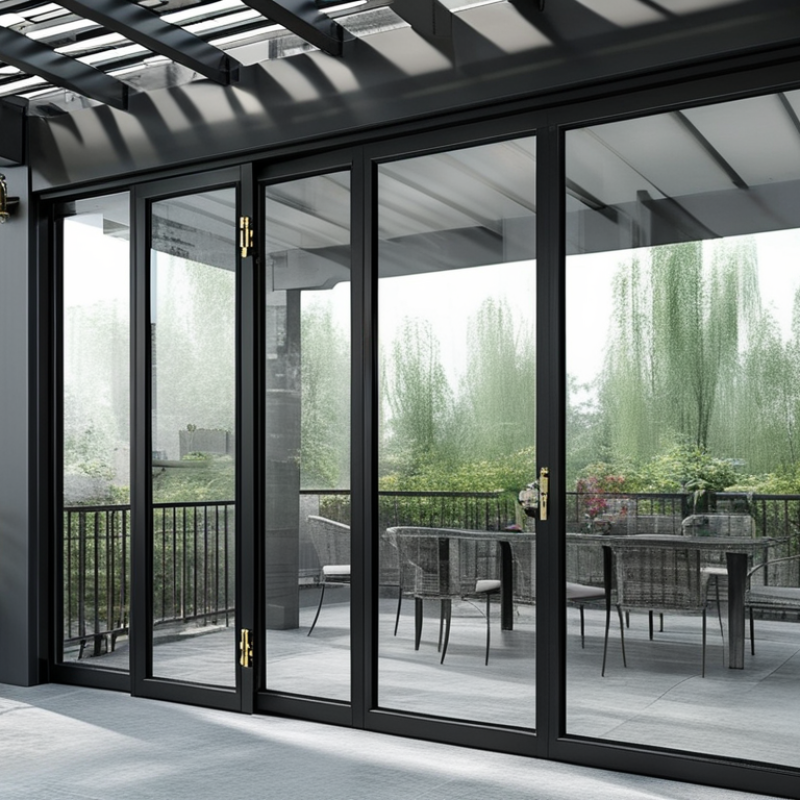
The selected companies should therefore be viewed as a researched shortlist, not an absolute ranking. Project location, climate, building codes, budget, and installation quality remain decisive. We also consider design evidence, such as slim black frames, oversized sliding panels, recessed tracks, and low-E glazing. The strongest manufacturer is not always the largest one. Reliability often appears in the small details.
China’s Aluminium Patio Door Industry: 2024 Output, Exports, and Demand
China’s aluminium patio door industry expanded with upstream capacity and overseas demand in 2024. The National Bureau of Statistics reported approximately 43.4 million tonnes of primary aluminium output, an annual increase of about 3.9%. This does not equal finished-door production, but it shows strong material availability. More importantly, it can pressure factories to compete on processing quality rather than volume alone.
UN Comtrade data for HS 761010 indicates China exported more than US$3 billion in aluminium structures, including doors, windows, and frames, during 2024. Patio doors form only part of this category. The figure still confirms China’s export strength. For a credible top-ten manufacturer review, buyers should check factory output, export records, thermal-break design, and independent air, water, and wind-load testing. Product photos are not enough.
Demand is also becoming more technical. Grand View Research estimates continued growth in the global aluminium doors and windows market, supported by renovation, energy efficiency, and large glazed openings. However, market reports often combine residential windows, commercial systems, and patio doors. Their figures should not be treated as patio-door sales alone. In practice, buyers increasingly request low-U-value frames, multi-point locks, concealed drainage, and tested glazing combinations. Some suppliers still publish impressive thermal claims without showing complete test conditions. That weakness deserves attention.
How to Rank the Top 10: U-Values, Air Leakage, and Test Standards
Ranking the top 10 China aluminium patio door manufacturers requires more than comparing catalogue prices. U-value should be a primary measure. It shows how quickly heat passes through the complete door assembly. Lower values generally indicate better insulation.
I would request laboratory reports for the full door, not only the glass centre panel. Frame design, thermal breaks, spacers, seals, and installation gaps can change the result. A door with excellent glass may still perform poorly around its edges. That detail is often missed.
Air leakage deserves equal attention. Testing under controlled pressure can reveal weak corners, worn gaskets, or poor locking compression. Standards such as ASTM E283, EN 1026, and GB/T 7106 use different procedures or reporting formats. They should not be compared casually. Check the test pressure, specimen size, leakage rate, and report date.
A practical ranking should verify accredited laboratory evidence and production consistency. Factory audits can examine corner crimping, drainage paths, seal storage, and quality records. Site experience also matters. A tested door may lose performance after careless installation. I would score verified data higher than attractive claims, although even this approach has limits. Different laboratories, climates, and installation methods can produce uneven results. That uncertainty should remain visible.
Top 10 China Aluminium Patio Door Manufacturers by Product Capability
A credible list of the top 10 China aluminium patio door manufacturers should focus on product capability, not factory size alone. China’s National Bureau of Statistics reported an urbanization rate of 66.16% in 2023. This supports continued demand for balcony upgrades, residential projects, and energy-efficient renovations.
The strongest manufacturers usually demonstrate stable extrusion quality, accurate CNC machining, and controlled powder coating. Their patio doors may include thermal-break frames, multi-point locks, reinforced rollers, and low-E glazing options. The 2024 China Building Energy Efficiency Annual Development Report highlights the importance of improving building envelope performance.
Therefore, air leakage, water resistance, and thermal insulation deserve more attention than attractive catalog photos. In my experience, production samples often reveal more than online specifications. A few suppliers still provide impressive drawings but weak test evidence. That gap needs careful review.
Tips: Ask each manufacturer for recent test reports, section drawings, hardware load data, and installation guidance. Compare U-values, air-tightness grades, and warranty terms under the same testing standard. The International Energy Agency continues to identify buildings as a major source of global energy demand, so thermal performance is not a minor detail. Also inspect corner joints and drainage paths. Small failures appear there first. A useful ranking should reward repeatable quality, customization control, export documentation, and after-sales responsiveness, while admitting that no supplier excels in every category.
Comparing Profiles, Thermal Breaks, Glass Options, and Certifications
What Are the Top 10 China Aluminium Patio Door Manufacturers?
Comparing profiles, thermal breaks, glass options, and certifications reveals more than factory size. A reliable top-ten shortlist should show tested performance, traceable materials, and consistent installation support. The International Energy Agency reports that buildings consume about 30% of global final energy. Door selection therefore affects comfort, cooling demand, and long-term operating costs.
For aluminium profiles, check alloy grade, wall thickness, powder-coating quality, and drainage design. Thermal-break systems commonly use polyamide strips to separate interior and exterior metal. Ask for whole-door U-value reports, not profile-only claims. Double glazing with low-emissivity coating is practical in many climates. Triple glazing may improve insulation, but it adds weight and cost. Glass safety matters too. Look for tempered or laminated glass, spacer details, and tested air, water, and wind performance. Relevant references include GB/T 8478-2020, ASTM E283, ASTM E331, and NFRC 100.
Tips: Request recent laboratory reports, sample corners, and warranty terms. Confirm whether ratings cover the complete assembled door. ISO 9001 supports process control, but it does not prove thermal performance. Export certifications can also be misunderstood. CE marking, where applicable, should match the destination market and product scope. In factory discussions, I would inspect drainage paths and locking alignment personally. Small gaps often become noticeable drafts. Supplier rankings remain imperfect without installation data, and that limitation deserves attention.
What Are the Top 10 China Aluminium Patio Door Manufacturers? - Comparing Profiles, Thermal Breaks, Glass Options, and Certifications
| Position | Manufacturer Category | Typical Aluminium Profile | Thermal-Break Configuration | Common Door System Performance | Glass Options | Maximum Typical Panel Size | Hardware and Configuration | Common Certifications and Test Documents | Best-Fit Project Type |
|---|---|---|---|---|---|---|---|---|---|
| 01 | Large-scale integrated aluminium door producer | 6063-T5 or 6063-T6 extruded aluminium; wall thickness commonly 1.6–2.0 mm; powder-coated, anodized, or PVDF finishes | Polyamide PA66 GF25 thermal barrier, typically 20–30 mm wide; insulated frame and sash options | Designed for improved air tightness, water resistance, and reduced frame heat transfer; performance depends on the complete tested assembly | Double glazing such as 5+12A+5 mm; laminated, tempered, Low-E, tinted, and argon-filled units available | Approximately 1.2–1.8 m wide and 2.2–2.8 m high per sliding panel, subject to glass and hardware weight limits | Multi-point locks, stainless-steel rollers, adjustable handles, anti-lift devices, and soft-close options | ISO 9001 quality management; powder-coating test reports; EN 12150 tempered-glass documentation; project-specific air, water, and wind-load reports | Residential developments, villas, hotels, and export distribution projects |
| 02 | Premium system-door manufacturer | Thermal-break aluminium profiles with slim sightlines; common frame depths of 70–100 mm | Multi-cavity PA66 GF25 strips with insulated glass pockets and continuous perimeter gaskets | Suitable for projects requiring lower U-values and improved condensation control compared with non-thermal-break systems | Double or triple insulating glass; 6–16 mm cavity; Low-E coatings, laminated safety glass, acoustic glass, and warm-edge spacers | Approximately 1.0–1.5 m wide and 2.4–3.0 m high per panel, depending on system design | Heavy-duty rollers, concealed drainage, compression seals, keyed cylinders, and motorized opening options | ISO 9001; ISO 14001 where applicable; CE-related technical documentation for relevant components; EN 14351-1 test reports when commissioned | High-end residences, coastal properties, commercial façades, and energy-conscious buildings |
| 03 | High-volume export-oriented manufacturer | Standard and thermal-break 6063 aluminium; common finishes include white, grey, black, wood-effect, and custom RAL colors | PA66 GF25 thermal isolators; optional insulated mullions and reinforced meeting stiles | Good balance between cost, weather resistance, and production flexibility; final values vary by glass and gasket selection | Single, double, laminated, tempered, frosted, reflective, and Low-E glass; optional insect screens | Approximately 0.8–1.4 m wide and 2.1–2.6 m high per panel | Top-hung or bottom-rolling systems, standard rollers, hook locks, recessed handles, and child-safety restrictors | ISO 9001; material mill certificates; coating thickness reports; glass compliance documents; factory inspection records | Apartment projects, renovation work, standard villas, and containerized export orders |
| 04 | Custom-engineering aluminium door fabricator | Engineered 6063-T5/T6 profiles with reinforced jambs, deeper tracks, and custom corner solutions | Thermal-break frame, reinforced sash, insulated thresholds, and optional composite thermal isolators | Can be configured for large openings, high wind loads, enhanced acoustic performance, and improved thermal efficiency | 6–19 mm glazing range; laminated acoustic glass, solar-control Low-E, triple glazing, and oversized tempered units | Approximately 1.2–2.0 m wide and 2.5–3.2 m high per panel after structural review | Heavy-duty stainless-steel rollers, multi-point locking, flush tracks, motorized locks, and customized drainage | ISO 9001; structural calculation files; wind-load, water-tightness, and air-permeability reports; glass safety documentation | Luxury residences, panoramic openings, resorts, and architect-led custom projects |
| 05 | Mid-market sliding-door specialist | Thermal-break and non-thermal-break aluminium series; typical sash wall thickness of 1.4–1.8 mm | PA66 GF25 strips commonly 18–24 mm wide; insulated glass edge protection and EPDM gasket systems | Practical weather performance for moderate climates; suitable system selection is required for severe exposure zones | 5–6 mm tempered glass, 5+9A+5 mm or 5+12A+5 mm insulating glass, laminated safety glass, and tinted glass | Approximately 0.7–1.2 m wide and 2.0–2.5 m high per panel | Aluminium or stainless-steel rollers, hook locks, standard handles, anti-jump blocks, and optional screens | ISO 9001 or equivalent internal quality system; EN 12150 glass documentation; coating and dimensional inspection records | Residential construction, balcony enclosures, low-rise housing, and budget-conscious developments |
| 06 | Energy-efficiency-focused manufacturer | Deep thermal-break profiles with insulated glazing beads, reinforced corners, and optional low-conductivity spacers | PA66 GF25 multi-chamber barriers, foam-filled chambers in selected sections, and insulated sill designs | Optimized for lower whole-door U-values when paired with Low-E insulating glass and continuous gaskets | Double or triple Low-E insulating glass, argon or krypton fill where available, warm-edge spacers, and solar-control coatings | Approximately 0.9–1.5 m wide and 2.2–2.8 m high per panel | Multi-point locks, insulated thresholds, compression seals, stainless-steel rollers, and optional smart locks | ISO 9001; thermal transmittance calculations; condensation-risk analysis; air, water, and wind-load test reports when required | Green buildings, cold or hot climates, passive-design projects, and energy retrofit work |
| 07 | Coastal and high-wind application supplier | Reinforced 6063 aluminium profiles with thicker meeting stiles, stronger corner joints, and corrosion-resistant finish options | Thermal-break profiles with reinforced steel or aluminium inserts where structural calculations require them | Configured for elevated wind pressure, driving rain, and frequent operation; project-specific testing is recommended | Heat-strengthened or tempered laminated glass, solar-control Low-E, impact-resistant glazing, and obscured glass | Approximately 0.8–1.4 m wide and 2.1–2.7 m high per panel, depending on wind-load calculations | Stainless-steel rollers, corrosion-resistant locks, multi-point systems, reinforced tracks, and anti-lift protection | ISO 9001; salt-spray or coating-resistance reports; wind-load calculations; laminated-glass and safety-glazing documentation | Coastal residences, high-rise balconies, waterfront hotels, and tropical developments |
| 08 | Minimalist slim-frame door manufacturer | Slimline aluminium profiles with reduced visible sightlines; commonly available in anodized or powder-coated finishes | Compact thermal-break sections designed to balance narrow sightlines with insulating-glass capacity | Prioritizes appearance and daylight area while maintaining practical weather resistance for approved panel sizes | Tempered, laminated, Low-E, neutral solar-control, acid-etched, and clear insulating glass | Approximately 0.7–1.2 m wide and 2.1–2.6 m high per panel; larger sizes require engineering review | Concealed or low-profile rollers, recessed pulls, slim meeting stiles, magnetic locks, and flush tracks | ISO 9001; anodizing or powder-coating reports; glass safety certificates; prototype or project-specific performance testing | Modern villas, premium apartments, interior-exterior transitions, and design-led renovations |
| 09 | Integrated doors-and-windows manufacturer | Compatible aluminium profile families for patio doors, windows, folding doors, and fixed glazing; 6063 alloy is common | Shared thermal-break platform with matching corners, mullions, transoms, and glazing beads | Useful for projects needing consistent appearance and coordinated specifications across several aluminium products | Single and insulating glass, tempered, laminated, Low-E, acoustic, tinted, and decorative options | Approximately 0.8–1.4 m wide and 2.1–2.7 m high per panel | Standard or heavy-duty rollers, multi-point locks, folding configurations, screens, and coordinated window hardware | ISO 9001; profile and hardware inspection records; glass compliance files; installation and quality-control documentation | Whole-building packages, residential compounds, hotels, offices, and mixed-use developments |
| 10 | Small-batch OEM and private-label fabricator | Customer-selected aluminium systems with standard or custom profile cutting, machining, and finish matching | Available thermal-break systems generally use PA66 GF25 strips; specification depends on the selected profile series | Flexible for low-volume orders and customized dimensions; independent sample testing is advisable before mass production | Tempered, laminated, double-glazed, Low-E, frosted, tinted, and patterned glass based on local availability | Approximately 0.7–1.3 m wide and 2.0–2.6 m high per panel, subject to hardware and glass limitations | Standard rollers and locks, customized handles, optional screens, and project-specific hardware packages | ISO 9001 where certified; material certificates; coating reports; glass safety documentation; pre-shipment inspection records | Private-label products, replacement doors, boutique developments, and small customized export orders |
Buyer Metrics: MOQ, Lead Time, Warranty, Price, and Export Compliance
When comparing China’s aluminium patio door manufacturers, measure more than catalogue design. UN Comtrade data places China among the leading exporters of aluminium structures under HS 7610. However, export volume does not prove reliable production. Request the manufacturer’s MOQ, production capacity, and recent inspection records. For standard sliding doors, MOQs may start near 10 units, while customized profiles often require larger orders. Confirm this in writing.
Lead time should include drawing approval, tooling, fabrication, glazing, and packing. A practical quotation may show 25–45 days after deposit and final drawings. Complex finishes can add time. Ask for a milestone schedule, not only one delivery date. The World Bank’s Logistics Performance Index 2023 shows that customs and shipment reliability strongly affect international delivery performance. Therefore, verify export documents, HS codes, packing lists, certificates of origin, and Incoterms responsibilities before payment.
Warranty terms need technical detail. A credible supplier should state coverage for frames, hardware, glass seals, coating, and installation-related exclusions. Five years for powder coating and ten years for frame performance may be reasonable negotiation targets, but they are not universal standards. Check coating compliance through test reports referencing AAMA or ISO methods. Request sample units before mass production. Small defects matter. I have seen attractive quotations fail because drainage details were unclear. Price should include glass specification, hardware grade, packaging, inland transport, and replacement terms. A low unit price can hide expensive omissions. Recheck every assumption.
Article Source:
Contact Us
We offer a just-in-time delivery solution supplying the highest quality materials to our customers. Get in touch today and learn how we can help your company.
Get in touch