How to Choose the Right Threaded Shaft End?
Choosing the right Threaded Shaft End is a small decision with serious mechanical consequences. The end carries torque, axial load, vibration, and assembly stress. A poor choice may loosen during operation. It may also damage mating threads or create difficult maintenance.
Mechanical design author Robert L. Norton offers a useful reminder: “Design is not just about making something work; it is about making it work reliably.” This principle applies directly to threaded shaft selection. The correct option depends on more than thread diameter. Consider thread form, pitch, material, shoulder geometry, engagement length, and the expected load cycle. Check the mating nut, coupling, bearing, or actuator before ordering the shaft.
Look closely at the application. A stainless steel shaft may resist corrosion near washdown equipment. A hardened alloy steel end may perform better under repeated torque. Fine threads can improve adjustment, but they may be less tolerant of dirt and cross-threading. That trade-off is easy to overlook.
Measure twice.
Real installations are rarely perfect. Misalignment, burrs, heat, and uneven tightening can change performance. I have found that drawings often hide these practical details. They deserve a second review. Engineers should confirm dimensions against manufacturer data, test samples under realistic loads, and document the final choice. No single Threaded Shaft End suits every machine. The reliable choice is the one matched to the actual environment, not merely the one that fits on paper.
Understanding Threaded Shaft End Types and Their Applications
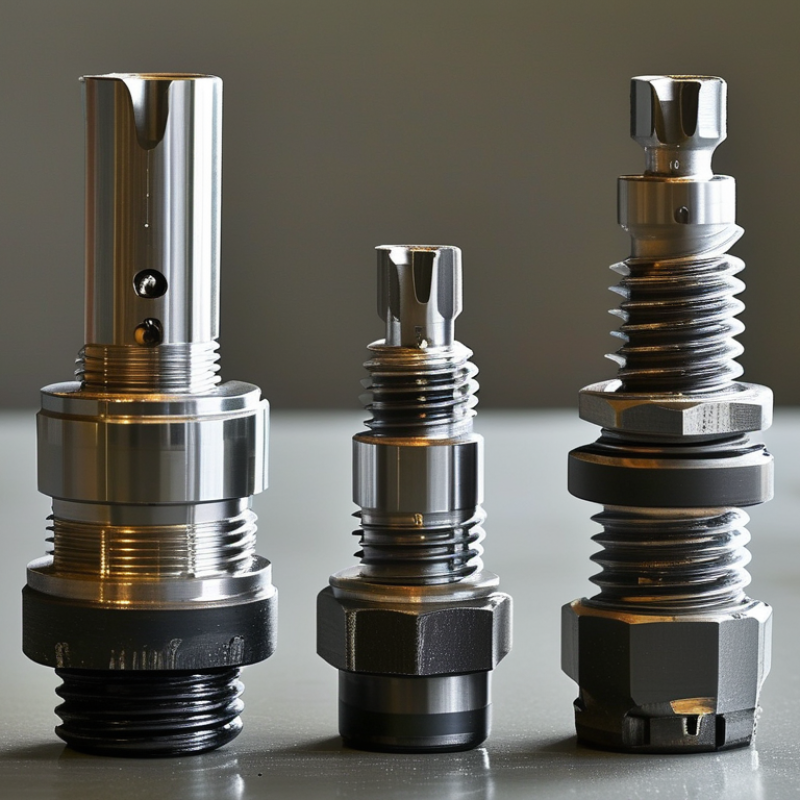
Choosing the right threaded shaft end starts with understanding its type and working purpose. Male threaded ends suit nuts, couplings, and adjustable supports. Female threaded ends accept bolts or threaded rods inside the shaft. Stud ends provide fixed engagement, while reduced ends help connect shafts with different diameters. Each design changes installation space, load transfer, and maintenance access.
Thread profiles also affect performance. Coarse threads assemble quickly and tolerate dirt better. Fine threads offer more adjustment and stronger resistance to loosening. A shoulder can improve alignment and create a clear seating point. In machinery, these features support actuators, conveyor rollers, fixtures, and rotating assemblies. Check load direction, vibration, shaft material, thread length, and available clearance. A longer thread is not always safer. Excess engagement may complicate removal.
Tips: Match the thread to the actual application, not only the drawing. Measure the mating part carefully. Inspect the shoulder and first thread for damage. I used to treat diameter as the main answer, but that approach was too narrow. Temperature, repeated loading, and tool access can change the best choice. When uncertain, compare the shaft end with the assembly’s maintenance routine. A practical test fit often reveals problems that calculations miss. Small details matter.
How to Choose the Right Threaded Shaft End?
Understanding threaded shaft end types and their applications starts with the nominal diameter and thread pitch. The chart shows common ISO metric coarse-thread combinations used for general mechanical fastening.
Fully threaded ends are suitable when continuous adjustment or maximum engagement is required. Partially threaded ends are useful when a smooth bearing or locating section is needed, while threaded studs are commonly used for permanent or double-sided fastening. The metric coarse-thread values shown are based on ISO 261 and ISO 262 nominal thread dimensions.
Matching Thread Dimensions, Materials, and Strength Requirements
How to Choose the Right Threaded Shaft End?
A threaded shaft end must match the mating thread exactly. Check the nominal diameter, pitch, thread form, and tolerance class before ordering. A small pitch mismatch can cause binding, poor contact, or permanent thread damage. Do not rely on appearance alone. Measure the outside diameter with calipers, then verify the pitch using a thread gauge or technical drawing.
Material selection depends on load, environment, and installation method. Carbon steel suits many indoor assemblies, while stainless steel performs better around moisture. Hardened materials can resist wear, but they may become less forgiving during impact loading. Consider tensile strength, shear strength, fatigue resistance, and corrosion exposure together. The strongest material is not always the best choice.
I have seen failures caused by weak thread engagement rather than weak shaft material. The nut should engage enough threads to transfer the expected load safely. A short engagement length looks neat, but it can strip under repeated force.
Also inspect the unthreaded shoulder and thread runout. Sharp transitions may create stress concentrations near the loaded area. A relief groove or larger root radius can improve fatigue performance when the design allows it.
Preload matters too. Excessive tightening may stretch the shaft or damage softer mating threads. I still recheck torque values after reviewing the actual joint stiffness, because standard tables cannot describe every assembly. Measure twice. Then test the connection under realistic loading conditions.
Checking Installation, Alignment, Sealing, and Maintenance Needs
Choosing a threaded shaft end begins with the installation environment, not the thread size. Measure available clearance, tool access, insertion depth, and tightening direction. A shaft that fits the drawing may still be difficult to install beside a guard or bearing housing. ISO 965-1 provides the foundation for metric thread tolerances, but real assemblies also need practical access.
Alignment deserves equal attention. Check shaft runout, mating-face squareness, and radial offset before final tightening. Even a small angular error can create uneven loading, vibration, and premature seal wear. The SKF bearing failure analysis commonly attributes about 16% of failures to poor installation and another 14% to contamination. These figures concern bearings, not threaded shafts directly, but the lesson transfers clearly: assembly quality matters.
Sealing needs should guide the end design. Consider dust, water spray, chemicals, temperature, and shaft movement. A protected thread, suitable seal land, and controlled surface finish can prevent leakage and corrosion. Do not assume a tighter thread automatically improves sealing. It usually does not. Maintenance planning should include torque checks, thread inspection, lubrication control, and periodic alignment measurements. The U.S. Department of Energy’s Operations and Maintenance Best Practices guide reports potential maintenance-cost reductions of 25–30% through predictive practices, with downtime reductions of 35–45%. Those are program-level estimates, not promises for every shaft. In practice, inspection intervals may need adjustment after the first operating cycle. That part is often underestimated.
Comparing Options and Selecting the Best Threaded Shaft End
Choosing a threaded shaft end begins with the load, not the catalogue drawing. A fully threaded end suits compact assemblies and adjustable axial positioning. A partially threaded end leaves a smooth bearing surface, reducing fretting near the shoulder. A stepped end works better when a bearing, spacer, or seal needs a precise seat. The choice changes with torque, bending, speed, and service temperature.
The International Energy Agency reports that electric motor systems consume roughly 53% of global electricity. The U.S. Department of Energy’s Motor Systems Market Assessment estimates that motor-driven equipment uses about 69% of industrial electricity in the United States. These figures make efficiency and reliability practical concerns. A poorly fitted shaft end can increase vibration, friction, and maintenance demand. Match thread diameter and pitch with the transmitted torque, then check the reduced root area for fatigue. ISO 898-1 helps verify fastener strength classes, while ISO 965 supports thread tolerance selection.
Material matters too. Alloy steel handles repeated loads well, while stainless steel offers better corrosion resistance but may gall during assembly. I once treated a larger thread as automatically safer; the sharp thread runout later became the fatigue hotspot. That was a poor assumption. Specify a generous fillet, controlled surface finish, and suitable locking method. Fine threads improve adjustment, but coarse threads usually tolerate dirt and handling better. Test the selected end under realistic misalignment and start-stop cycles. Static calculations alone can mislead.