What Are Chemical Distributors and How Do They Work?

Chemical distributors are the connective tissue of the modern chemical supply chain. They purchase, store, blend, package, and deliver products used in coatings, agriculture, construction, healthcare, and manufacturing. A small drum leaving a regional warehouse may support an entire production line hundreds of miles away.

The market is substantial. The Global Chemical Distribution Market Report by Grand View Research identifies specialty chemicals as a major growth segment, driven by manufacturing, infrastructure, and pharmaceutical demand. ICIS market analysis also highlights consolidation, digital procurement, and supply-chain resilience as major industry forces. NACD reports that its member companies serve thousands of manufacturers while following Responsible Distribution principles. These figures show scale, but they do not explain every shipment.

As Eric R. Byer, former president and CEO of the National Association of Chemical Distributors, described the sector, “Chemical distributors are an integral part of the chemical value chain.” That role involves more than moving containers. Distributors check specifications, manage temperature-sensitive storage, prepare documentation, and coordinate delivery schedules. Safety remains central.

The picture is not perfectly tidy. Lead times change. Inventory forecasts can fail. A distributor may still rely on spreadsheets beside automated warehouse systems. Understanding how chemical distributors work therefore requires attention to people, processes, regulations, and practical judgment. This guide examines their business model, services, customer relationships, and evolving position within the global chemical industry.
What Are Chemical Distributors and How Do They Work?

Industry Context: €5.7 Trillion Global Chemical Sales in 2022 (Cefic)

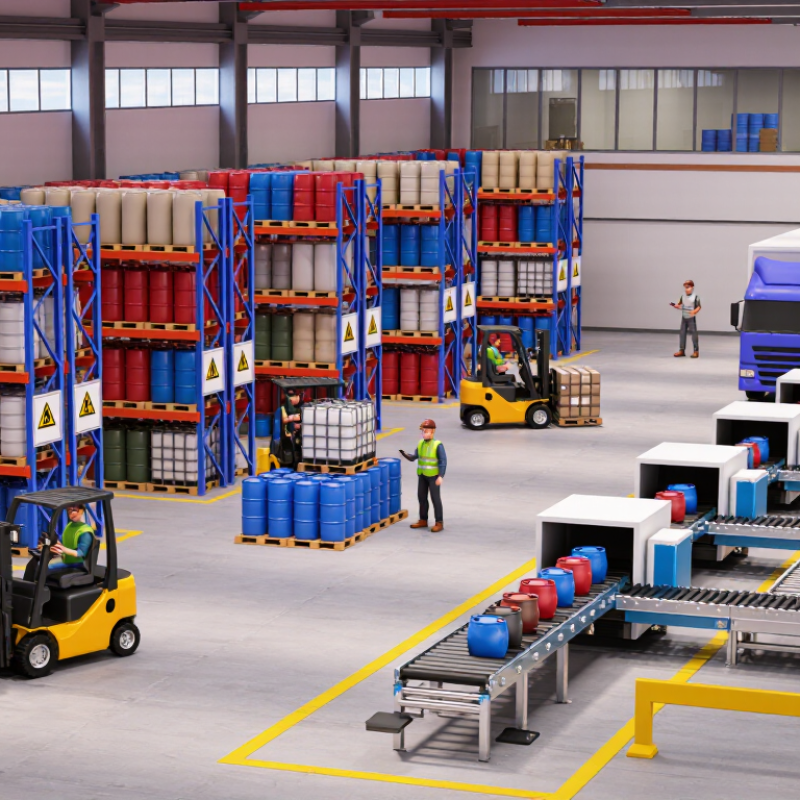
Chemical distributors connect producers with thousands of industrial users. Their work begins after manufacturing. They purchase bulk materials, hold inventory, repackage products, and arrange regional delivery. Some also provide blending, technical guidance, and documentation. A typical warehouse may contain sealed drums, intermediate bulk containers, and temperature-controlled storage. Every label matters.

The scale is substantial. Cefic reported approximately €5.7 trillion in global chemical sales in 2022, based on its Chemdata International figures. China represented about 43% of that market, while Europe contributed roughly 14.7%. These numbers explain why distribution is more than transport. It is a coordination system across currencies, ports, safety rules, and production schedules. The United Nations Environment Programme has also highlighted chemicals and waste management as a growing global challenge, especially across expanding industrial supply chains. Distributors help reduce delays by positioning materials closer to factories. That can protect production when ocean freight becomes unreliable.

Yet the model is not perfect. Forecasting demand remains difficult. Excess inventory ties up cash and may age before use. Shortages can stop a production line within hours. Experienced distributors therefore track batch numbers, storage conditions, supplier documentation, and customer specifications. Digital systems improve visibility, but human review still catches mistakes. A shipment can be “available” on paper and unusable in practice. This gap deserves more attention.

Core Functions: How Distributors Bridge Thousands of Chemical Supply Chains

Chemical distributors connect producers with thousands of industrial buyers, often across fragmented regional markets. Their work goes far beyond reselling materials. They forecast demand, consolidate shipments, manage storage, and arrange technical documentation. A typical order may involve a sealed drum, temperature checks, batch records, and delivery to a factory within a fixed production window.

Cefic’s Facts and Figures 2024 places global chemical sales above €5 trillion in 2023. That scale makes coordination essential. Distributors combine smaller customer orders, reducing empty transport capacity and inventory pressure. They also translate product specifications into practical purchasing decisions. UN Comtrade data shows chemicals remain one of the largest traded product groups worldwide. Local warehouses can therefore shorten lead times and reduce customs or documentation errors. The model is efficient, but not flawless. Forecasts can fail, and one delayed shipment may stop a production line. Good distributors use approved suppliers, batch traceability, safety data review, and contingency stock. These controls support reliability, although human mistakes still occur.

Tips: Check certificates, batch numbers, storage conditions, and delivery records before placing repeat orders. Ask how the distributor handles shortages, damaged packaging, and urgent technical questions. A low price may hide weaker service. Compare total supply risk, not only the invoice.

Step-by-Step Workflow: Sourcing, Storage, Blending, Sales, and Delivery

What Are Chemical Distributors and How Do They Work?

Step-by-Step Workflow: Sourcing, Storage, Blending, Sales, and Delivery

Chemical distributors connect approved manufacturers with industrial customers that need reliable materials. Their work begins with sourcing. Teams review supplier qualifications, specifications, safety data sheets, certificates of analysis, and production consistency. Price matters, but it cannot replace quality evidence. A responsible distributor also checks regulatory requirements before accepting an order.

Storage requires careful control. Workers inspect containers for damage, confirm labels, and record batch numbers. Materials are then placed according to compatibility, temperature, ventilation, and fire-safety requirements. Clear inventory records help prevent expired stock and shipment errors. Small details matter. A misplaced drum can create serious operational risks.

Blending may involve approved formulations, measured quantities, and controlled mixing conditions. Technicians follow documented procedures and test the finished material before release. Some batches need adjustment, which is why experienced staff record every change. Sales teams then match product specifications with the customer’s process, not merely the requested name. They explain handling requirements, lead times, packaging, and documentation. Delivery staff secure the load, verify shipping papers, and confirm the receiving location. Tracking continues until the customer acknowledges receipt.

No workflow is flawless. A rushed receiving check or unclear handoff can weaken the entire chain. Regular audits, employee training, and honest incident reviews help improve reliability. The strongest distributors treat traceability as a daily discipline, not a filing exercise.

What Are Chemical Distributors and How Do They Work?

Step-by-step workflow: sourcing, storage, blending, sales, and delivery

Chemical distributors connect manufacturers with industrial customers by managing procurement, compliant storage, value-added blending, order processing, and delivery. The chart presents an indicative workflow timeline in business days; actual durations vary according to chemical classification, inventory status, testing requirements, and transport regulations.

Compliance Gate: OSHA’s 16-Section SDS and GHS Hazard Communication Rules

What Are Chemical Distributors and How Do They Work?

Compliance Gate: OSHA’s 16-Section SDS and GHS Hazard Communication Rules

Chemical distributors connect manufacturers with industrial users, but their role extends beyond storage and delivery. They verify labels, maintain Safety Data Sheets, and communicate hazards before products reach a workplace. OSHA’s Hazard Communication Standard applies to about 43 million workers across nearly 5 million workplaces, according to its regulatory analysis. That scale makes documentation a daily control, not paperwork.

Every covered chemical should have an SDS with OSHA’s required 16-section format. Sections on identification, hazards, composition, handling, exposure controls, and transport guide warehouse decisions. Distributors should compare container labels with the current SDS. They should also provide electronic access and printed copies when workers need them. A missing revision date can create confusion during an emergency. The process is clear, but human error remains stubborn. One rushed relabeling can separate a container from its hazard information.

Tips: Keep an SDS revision log. Check incoming labels against purchase records. Train receiving staff to pause questionable shipments. OSHA’s 2024 Hazard Communication amendments also reinforce updated label and SDS expectations, so distributors should review procedures regularly. A tidy file is not always a safe file. Audits should test real warehouse behavior, including whether workers can find the correct SDS within minutes.

Value Creation: Inventory, Technical Support, and Risk Reduction for Buyers

What Are Chemical Distributors and How Do They Work?

Value Creation: Inventory, Technical Support, and Risk Reduction for Buyers

Chemical distributors create value by making materials available when manufacturers need them. They purchase, store, and deliver products through controlled supply networks. Their warehouses may hold multiple grades, package sizes, and production lots. This reduces the pressure on buyers to maintain large inventories themselves. A reliable distributor also tracks batch numbers, storage conditions, and delivery records. These details matter when a material has strict handling requirements.

Inventory is only part of the service. Technical specialists can review specifications, certificates, and application conditions with the buyer’s team. They may suggest a different grade when performance, availability, or process stability becomes a concern. Practical support often includes documentation checks, sample coordination, and guidance on safe storage. Good advice must remain evidence-based. Assumptions can create expensive problems.

Risk reduction becomes visible during disruptions. A distributor may use demand forecasts, approved backup sources, and regional stock points to limit delays. They can also help buyers identify supply gaps before production stops. However, forecasts still miss sometimes. No inventory plan is perfect. Buyers should verify supplier qualifications, regulatory documents, and quality procedures independently. Clear communication is equally important, especially when specifications change. In my experience, the strongest partnerships involve regular reviews, honest limitations, and documented decisions. A distributor should not merely move containers; it should help buyers understand what they are purchasing and where the remaining risks sit.

What Are Chemical Distributors and How Do They Work? - Value Creation: Inventory, Technical Support, and Risk Reduction for Buyers
Value-Creation Area What the Distributor Does Information or Data Managed Direct Benefit for Buyers Common Performance Indicators
Inventory Availability Purchases, stores, and positions chemical products closer to customer production sites, often combining demand from multiple buyers. Stock-keeping unit, product grade, available quantity in kg or L, lot number, manufacturing date, expiry or retest date, and storage location. Shorter replenishment cycles, fewer production interruptions, and reduced need for buyers to hold large quantities of slow-moving materials. Fill rate, stockout frequency, inventory turnover, order lead time, and on-time delivery percentage.
Working-Capital Reduction Maintains shared inventory and supplies materials in smaller or more frequent deliveries instead of requiring every buyer to purchase large minimum quantities. Minimum order quantity, order frequency, average inventory value, usage rate, and payment or delivery schedule. Lower cash tied up in chemical stock, reduced storage requirements, and improved alignment between purchasing and actual consumption. Average inventory value, days of inventory on hand, purchase-order size, and inventory carrying cost.
Technical Support Provides product-selection guidance, application assistance, formulation input, troubleshooting, and coordination with qualified technical specialists. Required purity, concentration, viscosity, compatibility, operating temperature, process conditions, and application-specific quality requirements. Faster qualification of alternative materials, fewer process trials, and improved consistency in production or product formulation. Technical inquiries resolved, qualification time, trial success rate, complaint rate, and process-yield change.
Regulatory Documentation Collects and provides safety data sheets, labels, certificates of analysis, transport information, and other product documentation required for safe use and trade. Hazard classification, GHS label elements, exposure controls, composition information, batch data, country requirements, and applicable regulatory status. Less administrative workload, improved audit readiness, and better control of workplace, environmental, and transport compliance obligations. Document completeness, document-update cycle time, audit findings, and percentage of shipments with correct paperwork.
Logistics and Packaging Coordinates transportation, repackaging, drum or intermediate bulk container handling, labeling, and delivery scheduling according to product requirements. Package type, net quantity, pallet count, hazard class, temperature requirements, delivery address, and shipment condition. More suitable delivery quantities, improved handling efficiency, and lower exposure to packaging, loading, or transportation errors. Delivery accuracy, shipment damage rate, packaging deviations, transit time, and freight cost per shipment.
Supply-Chain Flexibility Coordinates multiple qualified sources, grades, pack sizes, and delivery routes while helping buyers evaluate technically acceptable alternatives. Approved-product list, specification comparison, source lead time, qualification status, regional availability, and substitution requirements. Reduced dependence on a single supply route and greater ability to respond to shortages, demand changes, or geopolitical disruptions. Number of qualified sources, alternative qualification time, supplier concentration, and backorder duration.
Quality Assurance Controls receiving, storage, batch traceability, sampling, documentation review, and complaint or nonconformance coordination. Batch or lot number, certificate of analysis, inspection result, storage condition, chain of custody, and corrective-action record. Improved traceability, faster investigation of quality issues, and lower probability of using material outside the agreed specification. Lot traceability rate, rejected-lot percentage, complaint-resolution time, and certificate accuracy.
Risk Reduction Applies procedures for hazardous-material storage, segregation, handling, emergency response, transport coordination, and incident reporting. Hazard category, incompatibility information, storage temperature, emergency contact data, spill-control requirements, and transport classification. Lower operational, safety, environmental, and compliance exposure for buyers that may not maintain specialized distribution infrastructure. Incident frequency, near-miss reports, training completion, inspection findings, and corrective-action closure time.
Demand Planning Combines customer demand signals with supplier lead times and replenishment constraints to support more reliable purchasing plans. Historical usage, forecast quantity, seasonality, lead time, safety-stock level, open orders, and projected delivery date. Improved production planning and earlier visibility of potential shortages or excess inventory. Forecast accuracy, forecast bias, planning-cycle time, schedule adherence, and emergency-order frequency.
Total Cost Optimization Evaluates product price together with freight, packaging, storage, handling, quality, compliance, and downtime-related costs. Unit price, delivered cost, freight cost, handling cost, storage cost, minimum order quantity, and cost of quality incidents. Supports purchasing decisions based on total delivered value rather than unit price alone. Delivered cost per kg or L, cost per production batch, logistics cost share, and cost of nonconformance.

Contact Us

We offer a just-in-time delivery solution supplying the highest quality materials to our customers. Get in touch today and learn how we can help your company.

Get in touch